Pavilion Damansara Heights Rental Yield for Investors: What Real Returns Actually Look Like
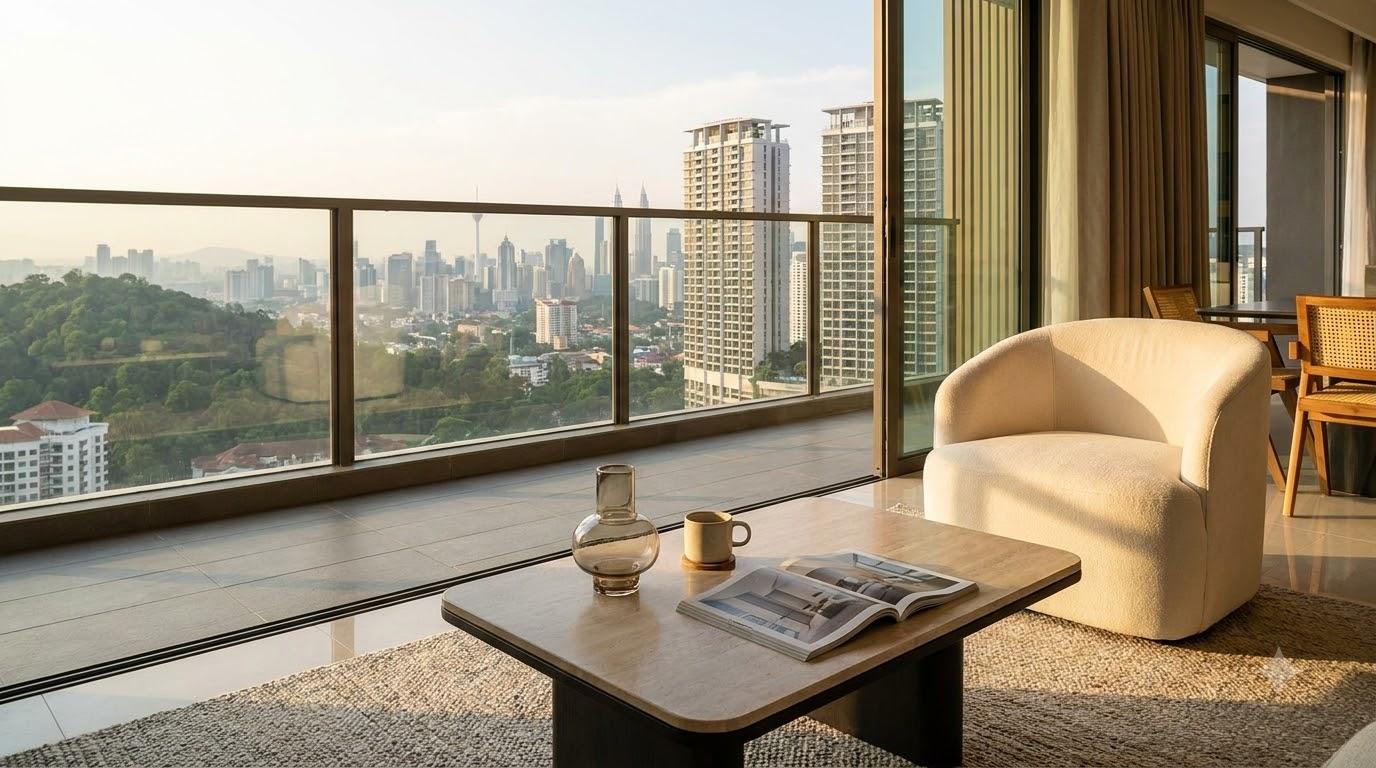
Pavilion Damansara Heights can deliver healthy gross rental yields for investors, typically in the mid-to-high four percent to around six percent range for well-chosen serviced apartment units, but the number that matters is your net yield after service charges, assessment and quit rent, vacancy gaps, and fit-out. As a licensed negotiator (REN 76742) handling rentals and sales around Damansara Heights, I see the same pattern repeatedly: buyers compare two units of the same size at roughly the same price, and one earns a comfortable margin while the other barely breaks even. This guide breaks down why, using real factors that move rental returns in this development, so you can evaluate a unit before committing, not after.
Before the numbers, one honest note: I will not quote specific current asking rents or per-square-foot transacted prices here, because they move with the market and quoting a stale figure does you no favours. Ranges and mechanics are durable; live numbers should come from a current listing check, which you can get by contacting Shermaine or registering interest for an updated rental snapshot of the blocks and unit types you are considering.
Why Pavilion Damansara Heights Attracts Investor Money
Pavilion Damansara Heights sits at the Pusat Bandar Damansara end of the Damansara Heights corridor, directly connected to a major mall component and to an MRT station. For a landlord, location is only half the story — the tenant pool is what pays your mortgage. This development draws three tenant groups at once: corporate expatriates and senior executives working in Damansara Heights, Bangsar and the KL city centre; young professionals who want a walk-to-mall, walk-to-train lifestyle without owning a car; and small families renting near international schools and medical centres in the wider Damansara and Mont Kiara orbit.
That mix matters for yield because it gives you fallback demand. A development that only suits one tenant type forces you to discount when that group thins out. A mixed tenant pool keeps occupancy resilient across market cycles, which is the single biggest protector of your realized yield — a vacant month costs you roughly one-twelfth of your annual return in one hit.
Connectivity and Access, in Practical Terms
The development's direct link to the MRT and to the mall is its core rental argument, and you should verify it on the ground rather than from brochures. Walk the actual route from the lobby to the station entrance and time it — "directly connected" can mean anything from an air-conditioned walkway to a five-minute open-air walk in the rain. Check the Rapid KL route maps for the line serving the station so you can describe the commute honestly to prospective tenants: which stops reach the city centre, how frequent trains run at the hours your tenant type actually travels, and where the nearest interchange sits.
For tenants with cars, confirm the practical driving times yourself during peak hours — Jalan Damansara, the Sprint Expressway and the Penchala Link all feed this corridor, and congestion patterns differ sharply between 8am and 11am. Honest commute facts in your listing reduce tenant turnover, and turnover is a silent yield killer: every changeover costs you agent fees, repainting, deep cleaning and two to four weeks of vacancy.
How to Actually Calculate Rental Yield Here (Gross vs Net)
Most investors only ever calculate gross yield, and gross yield is where bad decisions come from. The formulas are simple, but the discipline is in capturing every cost.
Gross yield = (annual rent × 12) ÷ purchase price × 100. If a unit rents at RM2,500 per month and you bought at RM600,000, gross yield is 5% — RM30,000 annual rent over RM600,000.
Net yield = (annual rent − all recurring costs) ÷ (purchase price + entry costs) × 100. Recurring costs include monthly service or maintenance charges (which scale with the size and facilities of the development), quarterly or annual assessment tax, quit rent where applicable, insurance, and a realistic vacancy allowance. Entry costs include legal fees and stamp duty on the sale and loan agreement, and — critical for a new or recently completed unit — fit-out: inbuilt wardrobes, kitchen cabinets, curtains, appliances and air-conditioning.
In this area, the gap between gross and net yield is usually one to two full percentage points once service charges and realistic vacancy are counted. A unit showing 5% gross may net you 3.5% to 4%. That is still competitive against fixed deposits and better than many KL fringe high-rise projects, but you must run the net number before comparing against anything.
A Quick Checklist Before You Buy Any Unit for Rent
- Ask for the current monthly service charge rate per square foot and confirm it in writing from the management, not the seller's verbal estimate — this is your largest fixed recurring cost.
- Check the maintenance fund and management record with the Joint Management Body (JMB) or Management Corporation (MC): a poorly maintained block loses tenants faster than any rent discount can fix.
- Inspect the unit's orientation — west-facing units in Kuala Lumpur carry higher air-conditioning bills, and tenants who notice this at viewing negotiate harder.
- Verify the floor plan's rentable layout: units with awkward balconies or wasted corridors rent for less per built-up square foot than efficiently laid out smaller units.
- Time your viewings at different hours to check traffic noise and lobby congestion — tenants do this before renewing, and you should do it before buying.
- Request a rental market update on actual recent tenancies for the specific block and unit type, which is something I provide directly from current data — contact Shermaine for this rather than relying on portal asking prices, which overstate achieved rents.
- Confirm utilities setup: some serviced apartments sit on commercial-tariff electricity or submetered arrangements, and this materially affects tenant affordability.
What Drives Rent (and Yield) Up or Down in This Development
Rental pricing in any large mixed-use development is driven by supply balance, and the practical factors here are worth naming precisely.
Unit Type and Tenant Matching
Smaller configurations — studios and one-bedrooms — usually post the higher percentage yields because their absolute rents are strong relative to price, but they churn tenants more often and face more competition from new completions nearby. Larger family configurations typically show lower percentage yields but longer tenancies and steadier cash flow. Neither is universally "better": match the unit to your goal — cash flow versus stability — before comparing headline numbers.
Furnishing Level
Fully furnished units in this corridor command meaningfully higher rents than partially furnished ones, because the target tenant — the mall-and-MRT lifestyle renter — pays for move-in convenience. But furnishing costs money upfront and depreciates, so the yield math must include it. As a rough planning approach, price your fit-out honestly at purchase time, expect it to need refreshing every five to seven years, and check whether the higher rent covers that depreciation plus your financing cost before assuming furnishing is automatically better.
View, Floor and Block
Units facing the KL skyline or green pockets of Damansara Heights justify premium rents and attract renewals. Low-floor units facing car park podiums or neighbouring blocks discount. These factors are exactly why two identical floor plans can differ in achieved rent — and why the same headline yield statistic quoted for "the development" can mislead you badly about your specific unit.
Competition and Market Timing
Damansara Heights and its fringe have seen substantial high-rise completions in recent years, and each wave of new handovers temporarily softens rents in older stock. Buying when supply is peaking can be a yield opportunity if you hold through the absorption period; buying at the top of a rent cycle on projected rents is the classic mistake. Ask for the current tenancy renewal rates in the specific building before you commit to a number.
The Buying and Renting Process: Documents, Fees and Timing
For a sub-sale purchase, expect these steps and costs. You will need a Sale and Purchase Agreement drafted by a lawyer, with legal fees and stamp duty on both the SPA and your loan agreement — budget these as several percent of purchase price in total. Your loan margin for a second or subsequent property is typically lower than for an owner-occupied first home, which affects your cash-on-cash return calculation directly.
For the tenancy side, prepare a standard Malaysian tenancy agreement (usually one year with option to renew), a stamp duty payment on the tenancy, and typically a two- or three-month security deposit plus half a month utility deposit. As your agent, I handle tenant sourcing, viewings, screening and the documentation, and the standard agency fee for tenancy in Kuala Lumpur is regulated — ask me to walk you through it so there are no surprises.
One Regulatory Point Every Investor Should Know
Verify that whoever represents you is registered. Every licensed negotiator in Malaysia carries a REN tag issued under the Board of Valuers, Appraisers, Estate Agents and Property Managers (BOVAEP), and you can check valid registration through LPPEH / BOVAEP. Dealing with an unregistered operator exposes you to deposit mishandling and unenforceable representation — my own tag is REN 76742, and you are entitled to ask any agent for theirs.
For valuation reference points, the official valuers' authority publishes property market reports, and the JPPH (Valuation and Property Services Department) market data is worth reviewing for area-level trend context, though building-level achieved rents will always be more current through an active agent's records.
Common Investor Mistakes in This Corridor
The recurring ones: buying on developer or seller projected rents instead of verified current tenancies; ignoring the service charge escalation history (management fees rise as buildings age); underbudgeting fit-out and then renting below market because the unit shows poorly; overpaying for a "view premium" that the local tenant pool does not actually pay for; and chasing gross yield in a high-churn unit type when their real goal was stable income. The expensive mistake is always the same one underneath — borrowing someone else's numbers instead of verifying your own.
Is Pavilion Damansara Heights a Good Investment Compared to Alternatives?
Honest comparison requires like-for-like. In Damansara Heights proper, stock is largely older low-rise and boutique, renting to corporate tenants at premium rates but with fewer new units. On the fringe, newer serviced apartment clusters compete on facilities and connectivity. Pavilion Damansara Heights' distinguishing combination — direct mall link, MRT access, and a branded mixed-use environment — places it against the top of that fringe competition rather than against the older boutique stock. For a balanced view, compare at least three developments on: verified current net yield, tenant turnover history, management quality and sinking fund health, and walkability of the actual commute. Where I add value is supplying the verified current numbers for all three side by side — contact Shermaine or register interest and I will prepare that comparison for the unit types within your budget.
Frequently asked questions
What rental yield can I realistically expect at Pavilion Damansara Heights?
Based on the corridor's dynamics, well-chosen units typically achieve gross yields in the mid-four to around six percent range, with net yields after service charges and vacancy running one to two percentage points lower. The specific figure depends heavily on unit type, floor, view, furnishing level and the rent you actually secure. Contact Shermaine for a current snapshot of achieved rents for your target configuration rather than relying on portal asking prices.
Is it better to buy a studio or a larger unit for rental income?
Studios and one-bedrooms generally show higher percentage yields and rent quickly to young professionals, but they churn tenants more often, which adds vacancy and refurbishment cost each cycle. Larger units yield less on paper but hold longer tenancies, particularly near family amenities. Choose based on whether your priority is maximum monthly cash flow or stable, low-hassle income.
What extra costs will eat into my yield as a landlord?
Expect monthly service charges, annual assessment tax, quit rent where applicable, insurance, periodic maintenance of appliances and air-conditioning, agent fees on each new tenancy, and vacancy gaps between tenants. Budget a realistic vacancy allowance of several weeks per year in your projections, and confirm the current service charge rate per square foot with the building management before purchase.
How does the MRT connection affect rental demand?
Direct rail access substantially widens your tenant pool to commuters who work in the city centre but prefer Damansara rents and lifestyle, and it lets tenants skip car ownership entirely. Practically, you should verify the actual walking route and time from the lobby to the station gates yourself, and check train frequency on the Rapid KL schedules, because "walking distance" claims vary and honest commute facts reduce tenant turnover.
Do I need to fully furnish the unit to rent it out?
In this corridor, fully furnished units command higher rents because the target tenant values move-in convenience. Furnishing is an upfront investment that depreciates over roughly five to seven years, so it only improves your net position if the rent premium exceeds the amortized furnishing cost. Many landlords start partially furnished and upgrade based on tenant feedback.
How do I verify a property agent's licence in Malaysia?
Every legitimate negotiator holds a REN tag registered with the Board of Valuers, Appraisers, Estate Agents and Property Managers under LPPEH, verifiable at lppeh.gov.my. Always ask for the tag at your first meeting — mine is REN 76742 — because registered practitioners are accountable for how deposits and transactions are handled.